Material Research
Complete

Researcher & Designer
Company
Academic/Self-Initiated
Exploratory Research, Material Study, Publications
6 months
About the project
A journey from being immaterial to realizing 'I' am material.
IM'Material is an exploratory research study on e-waste management focused on Seelampur—one of India's largest informal e-waste dismantling hubs. The project identifies the problem through a systemic approach, categorizing discarded electronics into two streams: Sellable E-waste (SE) and Non-Sellable E-waste (NSE).
Through a deductive approach, this research identifies a specific NSE material—polarizer film—and conducts a material study to understand its potential for reuse, upcycling, recycling, and downcycling via the EU Waste Hierarchy framework.

Discover & Define


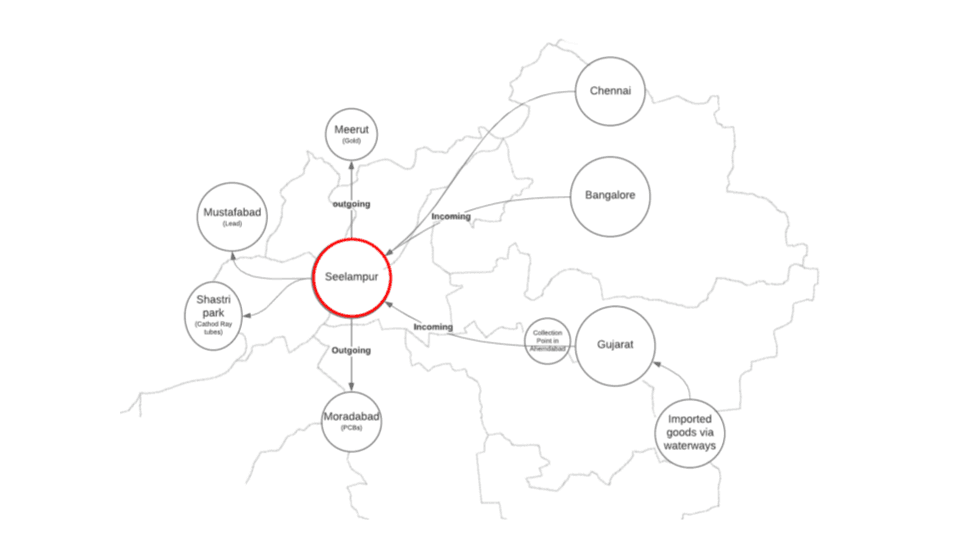
Seelampur operates as a dumping yard by day and an e-waste marketplace by night. Tons of e-waste arrive from metropolitan cities like Chennai, Bangalore, and Gujarat. The waste is dismantled, and buyers from specialized hubs (like Moradabad for PCBs) purchase specific components. We mapped this ecosystem to understand where valuable materials were being lost.
We focused on Polarizer Films—a plastic film made of polyvinyl alcohol. Based on the orientation of its polymers, it blocks either horizontal or vertical light rays (the Birefringence Phenomenon), allowing viewers to see displays. It is also used in sunglasses to reduce glare. Currently, this material is heavily discarded as NSE.

Strategy & Impact
The Polar Impact

A collaboration between e-waste dealers in Seelampur, electronic manufacturers, and material scientists could bring a polar impact on reducing non-sellable electronic waste.
Environmental Revivial: Such collaboration can revive around 2,000 metric tons of polarizer films just in Seelampur, converting them back into sellable waste due to their immense material potential.
Empowering Stakeholders: Raising awareness about these materials allows e-waste dealers to engage with more customers and empowers them to make better business decisions.
Industry Potential: The e-waste industry holds massive potential, as many dumped materials are yet to be identified as valuable, requiring more young minds and material scientists to join the sector.
Exploration & Realization
To communicate these findings beyond traditional academic papers, the research was adapted into multiple accessible formats:
IM'Material Research Document: A comprehensive compilation of the material study and findings.
IM'Material: The Rise of Electrombies: A published comic book designed to educate young and emerging adults about the realities of e-waste.
Radiculous Explorations: An interactive comic series visualizing the realities of the e-waste industry for social platforms.